- You are here:
- Home
- Design Review
- One I made earlier...
- New Road, Brighton - Martin Stockley
New Road, Brighton - Martin Stockley
If you know the Theatre Royal and Pavilion Theatres in Brighton then you know New Road. And until a couple of years ago, to get to these theatres and the western end of the Royal Pavilion Gardens you would have had to negotiate a fairly unwelcoming street. Narrow footways full of sign posts (usually with bikes chained to them), BT equipment boxes, badly parked vehicles and a distinct lack of places to sit and while away an hour.
![]() |
The street was one-way for vehicles, with a very narrow contra-flow bike lane (for the brave-hearted) and the usual supply of regulatory road markings telling you what to do and where to do it. In short, one of the most significant streets in Brighton was also one of the most unwelcoming.
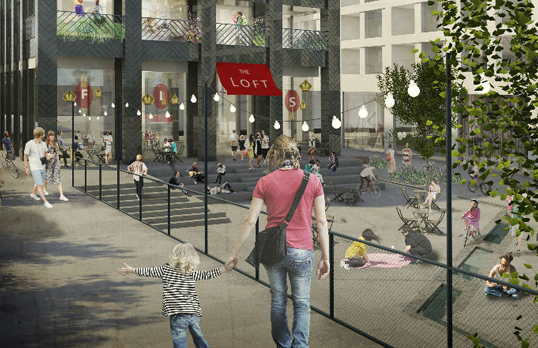
Fast forward to now and you will find yourself in Brighton’s fourth most visited attraction. A street where the fastest recorded speed of movement was a bike doing 13 mph and where people on foot and on bikes rule.
When Brighton Council decided that things should change in New Road they gathered a team together that they thought would understand the key issues of place making. The fact that the design team of Gehl Architects, Landscape Projects, Landscape Architects and Martin Stockley Associates, Civil, Structural and Transport Engineers were respectively based in Copenhagen, Salford and London did not put them off. After all, everybody likes a trip to the seaside now and then don’t they?
![]() |
From an initial brief to close the street to all vehicles the team persuaded Brighton to keep an open view (and eventually an open street) and to see what emerged.
A huge amount of research and analysis was done prior to any design decisions being made; who used the street, who didn’t, what ages, where did they sit/stand, what were they doing, how many doors opened onto the street, what were the uses etc? This was partly to provide some base data to refer to later but most importantly to inform the changes. Extensive consultation was carried out in particular with more vulnerable groups (including blind people and visually impaired).
All clutter has been removed and highways signage has been rationalised to the minimum and placed appropriately. No longer is the street divided into a number of separate spaces for walking, cycling, driving one-way, parking taxis, motorcycles, loading bays etc. Now the street responds more directly to people using it (since they now choose what to do rather than being instructed by signage).
What has been created is a pedestrian street where all vehicles are allowed. The majority users now dominate the space rather than those in vehicles. Actual hazard has been radically reduced now that people in vehicles move at low speed and give way to those on foot and on bikes. For the most vulnerable users the whole environment is now much less hazardous in real terms.
The resultant design reflects John Ruskin’s words, “It is far more difficult to be simple than to be complicated".
Martin Stockley
Chairman & Managing Director, Martin Stockley Associates
|
|