Skip to content

News

20 May 2010

5 Buildings in North West region win national architecture award

The Royal Institute of British Architects (RIBA) is pleased to announce the winners of the 2010 RIBA Awards. 5 winners in the North West region will today win an RIBA Award for architectural excellence.

The winning projects range from ‘an important new public space for Liverpool’ to a ‘flagship for the New Islington’ in Manchester.

The 5 buildings in the North West region that have won RIBA Awards are:
1. Chips, Manchester by Alsop Architects
2. Liverpool One, Sites 1 & 7, Liverpool by Haworth Tompkins with Dixon Jones
3. LJMU Art & Design Academy, Liverpool by Rick Mather Architects
4. New Roundhouse, Manchester by Walker Simpson Architects
5. The Pier Head and Canal Link, Liverpool by AECOM Design + Planning

RIBA Awards for architectural excellence will be presented across the country today with 102 buildings in the UK and Europe winning awards (93 in the UK and nine in the rest of the EU).

RIBA President Ruth Reed said about the 2010 RIBA Award winners:

“The RIBA Awards reflect not only the state of British architecture but also that of its economy. In the midst of the deepest recession in the 45 year history of the RIBA Awards this year’s winners demonstrate that although times might be hard for architects, there are still great buildings being built throughout the country and overseas. The RIBA Awards always give an opportunity for gem-like small projects and less established practices to shine through and this year is no exception.  Far from being a size prize, the RIBA Awards are for buildings that offer value to people’s lives. I am looking forward to seeing an exciting RIBA Stirling Prize shortlist.”

The RIBA Stirling Prize shortlist will be drawn from the 102 RIBA Award winners. The RIBA Stirling Prize, in association with The Architects’ Journal is awarded to the architects of the building that has made the greatest contribution to British architecture in the past year.  The prize will be presented at The Roundhouse, London on Saturday 2 October 2010.

Notes to editors:


1. For further press information and images please contact: Anna Johnson on 0151 707 4380 or e-mail anna.johnson@inst.riba.org

More information can also be found at www.architecture.com/awards.

2. Judges’ citations for the winners as follows:

Chips
Lampwick Lane, Manchester
Architect:  Alsop Architects
Client:   Urban Splash
Contractor:  Urban Splash Build
Structural Engineer: Martin Stockley Associates
Services Engineer: Quartzelec
Landscape Design: Grant Associates
Contract Value: £20m
Date of completion: June 2009 
Gross internal area: 16,200 sq m

Chips is a flagship for the New Islington.  Its sculptural form and its strong graphic treatment create a striking architectural expression.  It’s what happens when an architect like Will Alsop meets a developer like Urban Splash: it’s flamboyant, daring and it’s also very big, more like the warehouses that hug the canals than some of the lesser attempts to house people in large numbers in these parts.   It is the first part of Alsop’s own masterplan to be delivered: a plan for a series of fingers of accommodation and leisure alongside water; and perhaps also an Alsop finger to the housing establishment.
Chips makes a clear decision about the architectural issues at stake in the project and it pursues these issues to an unusual conclusion.


Liverpool One, Sites 1 & 7
Liverpool L1 8JF
Architect:  Haworth Tompkins with Dixon Jones
Client:   Grosvenor
Contractor:  Balfour Beatty
Structural Engineer: Waterman Group
Services Engineer: Hoare Lea
Contract Value: Site 1 (Dixon Jones) - £12m, Site 7 (Haworth Tompkins) - £15.2m
Date of completion: October 2008
Gross internal area: 8255 sq m (Site 1)  8867 sq m (Site 7)

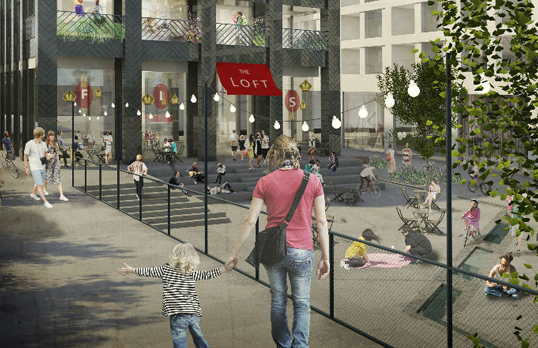
The project is an urban block with multiple authors – and this has resulted in a project with rich architectural qualities.  Part refurbishment, part social housing and part retail the block has a diversity of programmes and a range of architectural languages. The Dixon Jones arcade is a carefully considered experience. It draws on historical models that bring a grandeur and cultural texture to a contemporary retail offer. Howarth Tompkins use a tough engineering brick for their tough housing.  The unusual palette creates a variety of textures and which respond to difference in contexts at particular moments.
Overall the scheme suggests the possibility for a pluralistic architecture that can address social use while accommodating more luxurious sensations and experiences both spatially and materially.

LJMU Art & Design Academy
Duckinfield Street, Liverpool 
Architect:  Rick Mather Architects
Client:   Liverpool John Moores University
Contractor:  Wates Construction
Structural Engineer: Ramboll UK
Services Engineer: Ramboll UK
Contract Value: £24m
Date of completion: December 2008
Gross internal area: 11,000 sq m

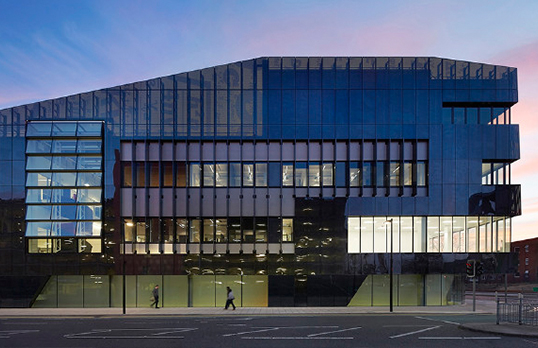
Walking into the building you get an immediate sense of activity: you look up, look down into the cafe, look either side and you are immediately struck by an atmosphere of creativity. It feels like you've arrived in a creative environment. On a very tricky sloping site the entrance and atrium are part of an entrance sequence that forms a new public space and link between the Art School and the Cathedral.
The building balances a robust simplicity that suits the demands for providing environments for creative activity with moments of more complex spatial arrangements in public areas such as the lobby, gallery space and lecture theatres.
The architects have given the students an enviable new environment that is both practical and inspiring.

New Roundhouse
1328-1330 Ashton Old Road, Manchester
Architect:  Walker Simpson Architects
Client:   New Roundhouse Manchester Settlement
Contractor:  J Greenwood
Structural Engineer: Shepherd Gilmour
Services Engineer: Environmental Services Design
Contract Value: £1.69m
Date of completion: June 2009
Gross internal area: 1000 sq m
 
Externally, the building creates a strong civic presence – an important quality in an area that is going through large-scale regeneration. Its simplicity of form and material – essentially a blur-brick box - gives a positive presence.
The elevation has to negotiate the clients concern both for visible presence in the community with the need for privacy for the buildings users. The exterior balances these needs by creating larger openings at higher level.
The building is organised around an atrium that is derived from the desire to create a naturally ventilated building. The atrium is positioned off centre in plan and gives the building an interesting interior spatial quality, linking together the projects different activities as well as offering glimpses though and beyond.

The Pier Head and Canal Link
Georges Parade, Liverpool  L3 1BY
Architect:  AECOM Design + Planning
Client:   Liverpool City Council / British Waterways
Contractor:  Balfour Beatty
Structural Engineer: Arup
Services Engineer: Liverpool 2020
Contract Value: £22m
Date of completion: June 2009
Gross internal area: 25,000 sq m

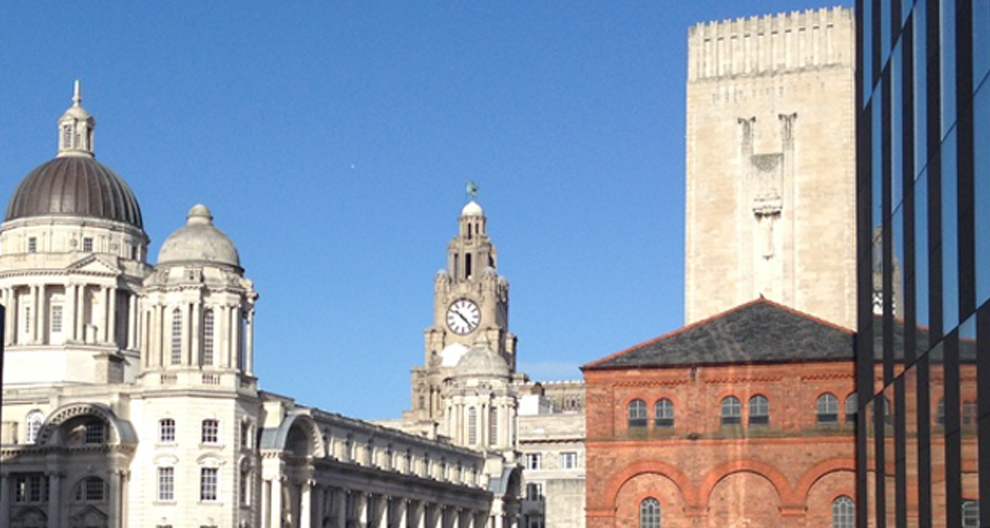
The Pier Head and new canal link form an important new public space for Liverpool.   This piece of public realm functions as an important bit of urbanism linking together the prominent landmarks such as the Liver Building, the new Liverpool Museum and the recent ferry terminal.
It also creates a new point of entry to Liverpool through the extension of the canal.  This has been dramatised by the landscaping. Spaces akin to amphitheatres sink into the ground around the canal turning the waterway into a kind of stage. 
Meanwhile the Pier Head has become a large urban park, drawing on its heritage, that can accommodate big public events but which also has its more intimate spaces with planting used to create softness.  

3. The RIBA is delighted to confirm The Architects’ Journal as sponsor of the RIBA Stirling Prize 2010. For more information please visit their website www.architectsjournal.co.uk.

4. The RIBA Stirling Prize jury comprises architects and lay judges from the arts.  The 2010 judges are: Edward Jones - Architect, Mark Lawson – Presenter, Lisa Jardine – Author, Ivan Harbour – Architect, and Ruth Reed, RIBA President.

5. The RIBA Trust manages the cultural assets of the Royal Institute of British Architects (RIBA), including the internationally recognised collections of the British Architectural Library. It is the UK’s national architecture centre, delivering the RIBA Awards and RIBA Stirling Prize; the Royal Gold Medal; International and Honorary Fellowships; a full programme of lectures, exhibitions, tours and other events; and an education programme.